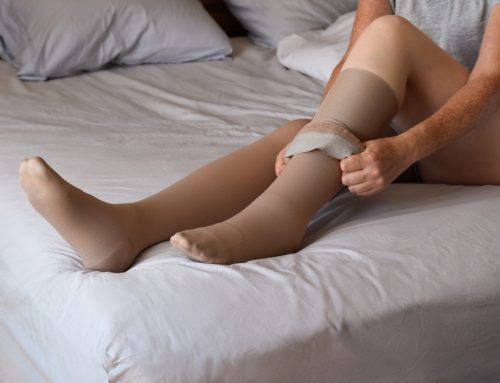
Someone told you to have your legs checked. Maybe it was your primary care doctor during a routine visit, a family member who noticed the veins on your calf, or you finally connected the heaviness and aching in your legs to the bulging vein you have been ignoring for two years.
You’re now facing a question no one has answered: What type of doctor treats varicose veins? If you search for a vein specialist in the Flint area, you will come across vascular surgeons, dermatologists, interventional radiologists, and clinics that call themselves vein centers. These options aren’t the same, and the differences matter because they affect the treatment you receive and what your insurance covers.
As many as 40 million Americans suffer from varicose veins, so it’s a common problem with established solutions. This article explains who treats vein disease, what the relevant qualifications mean, and how to choose the right type of doctor. This guide covers everything from choosing a specialty to booking your first appointment and deciding what to do next.
In This Article
- Which doctors treat vein disease?
- What board-certified actually means.
- Cosmetic vein treatment vs medical vein care.
- Do you need a referral?
- What a first vein evaluation involves.
- When to stop researching and get seen.
- Schedule your free screening evaluation today to find your next step.
Which Doctors Treat Vein Disease: The Differences You Should Know to Find the Right Provider
Various specialties treat veins, and there is a lot of overlap among them. The important question isn’t which specialty is best in theory, but which one suits your particular problem and what happens afterward.
| Provider | What they treat | Typical setting | When they fit |
|---|---|---|---|
| Vascular surgeon | Arteries and veins, including varicose veins and venous insufficiency | Hospital, vascular practice, or dedicated vein office | Leg symptoms, suspected reflux, or anything that may need a procedure |
| Interventional radiologist | Image-guided vein procedures | Hospital or outpatient imaging center | Catheter-based treatment, often on referral |
| Phlebologist or vein-focused physician | Vein disease specifically | Vein practice | Vein care is the main focus of the practice |
| Dermatologist | Skin, plus cosmetic spider veins | Dermatology office | Surface spider veins with no leg symptoms |
| Primary care physician | First evaluation and referral | Family medicine or internal medicine office | Starting point when you are not sure what you are dealing with |
Vascular Surgeon
Vascular surgeons train in the circulatory system outside the heart and brain, covering both arteries and veins. This specialty offers the most in-depth training in the underlying causes of varicose veins and venous insufficiency, not merely the visible vein itself.
Calling it a “surgery” is misleading, since most current vein treatment is not open surgery. When a vascular surgeon treats varicose veins, they generally perform office-based procedures such as ablation, sclerotherapy, or microphlebectomy, and the patient can often walk out the same day.
Interventional Radiologist
Interventional radiologists specialize in image-guided procedures. Their expertise includes various vein treatments, and they often work as part of a broader care team rather than being the doctor you see initially. Many work in hospitals or imaging centers and treat referred patients.
Phlebologist or Vein-Focused Physician
Phlebology means the study of veins. It describes a clinical focus rather than a distinct residency pathway. So, a doctor described as a phlebologist is trained in another specialty first, commonly vascular surgery, and then focuses their practice on vein disease.
Dermatology
Dermatologists look after the skin and often treat spider veins, which are small surface veins and are generally only a cosmetic issue. That aspect of their work is legitimate.
The scope limit matters because spider veins may sit on top of an underlying circulation problem, and treating the surface veins cosmetically doesn’t address the pressure building up in the deeper veins. If you have visible veins along with symptoms such as leg swelling, aching, heaviness, or skin changes, these symptoms indicate you need a medical examination rather than a cosmetic one.
Your Primary Care Doctor’s Role
Your primary care physician is a reasonable first stop and often the person who brings it up. They can rule out other causes of leg swelling, check your history, and tell you whether a vein evaluation makes sense next. This means a visit to a general practitioner usually results in a referral instead of a treatment plan.
What “Board Certified” Actually Means, And How To Check It
Anyone with a medical license can advertise vein treatment. Board certification is what you can verify, and it is a more useful signal than the words on the sign outside when you are deciding what to do next.
The most respected qualification for vein disease is board certification in vascular surgery, granted by the American Board of Surgery through the American Board of Medical Specialties, and it indicates that the individual has completed residency and fellowship training in the circulatory system and passed an examination.
There is also a credential that is specific to veins, namely the American Board of Venous and Lymphatic Medicine, which physicians from different specialties may choose to obtain. It represents an extra qualification but is not a replacement for specialty board certification or a minimum standard; on its own, its absence tells you nothing, and a vascular surgeon without it is still a vascular surgeon.
You can check any of this yourself in a few minutes:
- Check the doctor’s details on certificationmatters.org, which is the ABMS public verification tool.
- Make sure the listed specialty matches the type of care you are looking for.
- Check their hospital affiliations, since these require a separate credentialing review.
- Ask the office directly which staff member performs the procedures, as it may not be the doctor you see first, and this will influence your next move.
Cosmetic Vein Treatment Vs. Medical Vein Care
Cosmetic vein concerns are about appearance. Spider veins with no pain, swelling, or skin changes usually fall here, and insurance generally does not cover cosmetic treatment.
Medical vein problems relate to how blood moves. If your legs ache, swell, feel heavy, have discolored skin, and continue to show symptoms after standing for a while, this may mean the valves in your leg veins aren’t preventing blood from flowing in one direction. This is a medical condition, and insurance usually pays for an assessment and treatment if the symptoms and findings indicate it.
The issue is that you can’t reliably place yourself in a single category just by looking at your legs, since both conditions can occur together and the visible degree doesn’t always match what’s happening underneath.
Do You Need a Referral to See a Vein Doctor?
In most cases, no. Vein clinics often accept patients who call directly without a referral from another doctor.
It is up to your plan rather than the practice whether it requires a referral. With HMO plans, you often need a referral from your primary care physician before they pay for a specialist visit, whereas PPO plans usually don’t require one. Medicare and Medicaid plans differ. The practical move is to call the practice and ask about referral requirements before you book, then check your plan’s rules for specialist visits so you know what to do next. Some practices offer a no-cost screening to help you understand what comes next.
What Your First Visit Will Look Like
At your first visit, you’ll chat, and the doctor will assess your legs. They will ask what sensations you are experiencing, when the problem is most severe, and how long it’s been happening; then they’ll examine the areas that concern you, typically while you are standing, to decide the next step.
When your symptoms point to a medical issue involving the veins, the next step is usually a venous duplex ultrasound. This procedure uses sound waves to see how blood moves through the veins in your leg and whether it flows backward, a condition known as venous reflux. The test can distinguish between a cosmetic concern and a circulation problem, and no external examination can replace it.
Treatment is discussed after the ultrasound results are obtained, not before, so the next step depends on what the test shows and what you should do next.
When To Stop Researching And Get Seen
Certain symptoms will require you to seek medical help quickly. If one leg suddenly becomes swollen, warm, red, or painful, seek medical attention the same day. Chest pain, difficulty breathing, or coughing up blood also constitute a medical emergency.
Venous disease can worsen without severe symptoms. If you would like to learn more about how this progresses and what the risks are, we cover it separately in the section on what happens if you don’t treat venous disease, so you can decide your next step.
Book your free screening evaluation at VeinSolutions in either Flint or Lapeer today.
VeinSolutions is a specialist office for veins in Genesee and Lapeer counties, employing board-certified vascular surgeons who treat both cosmetic and medical vein conditions.
A free screening assessment is available for the very issue that this article discusses.
Before you incur any cost, you will meet with a board-certified vascular surgeon who will hear about your symptoms, examine your legs, and decide whether the issue appears cosmetic or medical. If it is determined to be medical, the surgeon will recommend a venous duplex ultrasound and a consultation, billed to your insurance if your symptoms warrant it. If the problem is deemed cosmetic, you will receive a treatment plan and a quote, at no charge.
You should arrange your screening so you can learn what you are facing and what it would cost, then leave knowing exactly what your next step is. Regardless of the outcome, you will know what to do next.
In any case, after you’ve gone through it, you’ll know exactly what you’re up against, how much it would cost, and what your next steps should be, more so than most people do after a whole week of searching.
You can get a free screening by phoning (810) 232-3363 at either the Flint or Lapeer office.