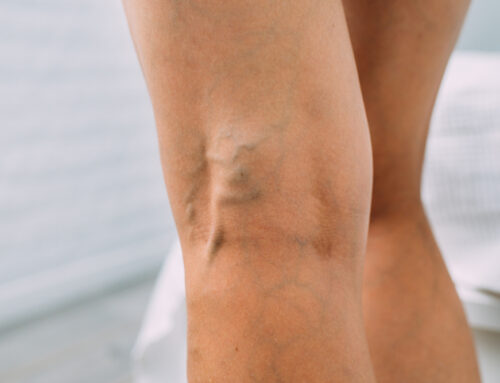
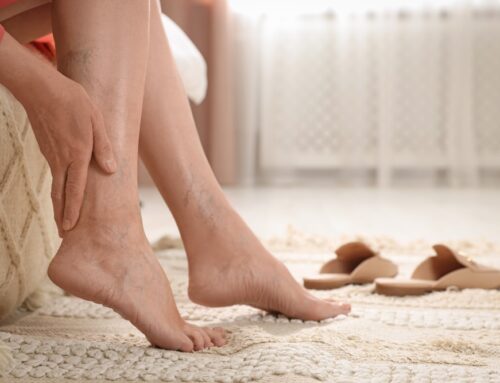
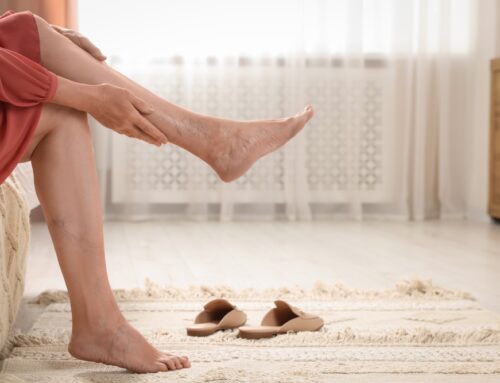
Varicose veins popping up during pregnancy can be alarming, but no need to worry. Pregnancy-related varicose veins are usually harmless and resolve postpartum. In this article, you’ll learn how to manage varicose veins safely during pregnancy and what symptoms to watch out for that may require medical attention.
Are Varicose Veins Normal During Pregnancy?
Varicose veins commonly occur in pregnancy due to increased blood volume, pelvic pressure, hormonal changes, and genetic factors.
Increased Blood Volume and Pelvic Pressure
A woman’s blood volume increases to support the baby and placenta, providing essential oxygen. Blood volume rises for three main reasons.
- Perfusion: Increased blood volume delivers crucial nutrients and oxygen to the fetus and placenta.
- Preparation: Higher blood volume helps the body prepare for birth and the expected blood loss during delivery.
- Adaptation: Increased blood volume helps maintain blood pressure during hormonal changes.
This increased blood volume is vital for both the mother and the baby. However, extra volume can strain and stretch veins, often leading to varicose veins during pregnancy.
Pelvic pressure is also a common experience during pregnancy. Do not worry, as this sensation is often harmless and may result from:
- Baby’s Weight: As your baby grows, added strain on the pelvic floor can cause pelvic aching.
- Baby’s Position: As the baby descends and rotates in the womb, ligaments and skin expand, which can increase pelvic discomfort.
- Hormonal Adjustments: Hormones such as relaxin, estrogen, and progesterone loosen ligaments and tissues, often causing heaviness or pelvic pressure.
These changes prepare you for birth and support your baby, but they also increase pelvic pressure. This pressure can hinder blood return from your legs, leading to twisting and swelling in your leg veins.
The Impact of Hormonal Changes
During pregnancy, a woman’s body undergoes major hormonal changes. Estrogen and progesterone levels increase, peaking in the third trimester. These hormones prepare the body for implantation, maintain pregnancy, support fetal and placental development, expand the uterus, and promote the growth of the lactation glands. Increased hormone levels also stretch and dilate veins, making it harder for blood to return to the heart. Hormonal changes support pregnancy but challenge circulation.
Genetic Predisposition and Other Risk Factors
Genetics strongly influences the development of varicose veins during pregnancy. If your mother or grandmother had them, you are more likely to develop them too.
Genetics isn’t the only factor in varicose veins during pregnancy; they can also be influenced by weight gain or prolonged sitting and standing. Gaining weight during pregnancy puts excess pressure on the vena cava, the vein returning blood to the heart. As your baby grows and your body mass increases, this major vein is compressed, slowing blood flow and straining the veins in your legs. Sitting or standing for a long time when pregnant requires the veins in the legs to work overtime to pump the increased blood volume back to the heart. All of these risk factors contribute to the likelihood of developing varicose veins during pregnancy, linking genetics, physical changes, and lifestyle.
When Do Veins Start to Show In Pregnancy?
After examining the causes, let’s look at when veins typically become visible in pregnancy.
Early Changes in the First Trimester
During the first trimester, a woman’s body dramatically changes to support a baby for 9 months. Before visible bulging veins appear, early warning symptoms may develop. The sudden rise in progesterone and blood volume often causes leg fatigue and tiredness. Shifting hormone levels can also increase skin sensitivity. These shifts can make the skin dry and itchy. Cramping and swelling may also occur, causing mild discomfort. These early symptoms often precede varicose veins as pregnancy progresses.
The Second Trimester Peak
These changes culminate in the second trimester, when varicose veins tend to worsen. As your uterus grows and blood volume rises, the extra pelvic pressure can cause it to bulge in the legs and ankles, leading to increased discomfort.
Progression Into the Third Trimester
Entering the third trimester, your baby exerts the most pressure on your pelvic veins. This further increases venous pressure. Higher pressure causes more blood to pool in your legs, vulva, and rectum. These are areas commonly affected by varicose veins. This is why varicose veins often become more pronounced late in pregnancy.
Will Varicose Veins From Pregnancy Go Away?
After childbirth, your veins start to heal as your body returns to normal blood and hormone levels. Your blood flow eases as your body loses extra blood. Lower progesterone helps your veins regain strength. You will notice visible changes in your legs, vulva, and rectum as your veins shrink.
The Typical Postpartum Recovery Timeline
Pregnancy-related varicose veins usually begin to fade within one to three months after childbirth. By six months, veins that can go away often do. Any veins still there after this point will likely stay.
Why Some Veins May Persist After Pregnancy
It is not guaranteed that varicose veins will disappear after pregnancy. Some veins may persist because increased blood volume and additional strain can damage the valves, leading to ongoing weakness. Hormone changes during pregnancy may stretch and soften the vein lining, sometimes leaving it permanently dilated. Additionally, genetics can influence whether veins regain their elasticity after delivery, making some individuals more prone to persistent varicose veins.
Managing Varicose Veins in Pregnancy
Since varicose veins from pregnancy often go away after you give birth, focus on managing them rather than treating them. Take these steps to help keep them from getting worse.
Stay Active and Avoid Prolonged Sitting or Standing
Incorporate light exercise and walking into your daily routine. Doing so benefits varicose veins by improving blood circulation in your legs during pregnancy. Staying active also helps prepare your body for labor by building cardiovascular endurance and core strength. Enhanced cardiovascular health supports effective blood flow back to the heart, which is especially important for weakened veins.
In addition to steady movement throughout the day, avoid sitting or standing for long periods. Static positions restrict healthy blood flow and increase the risk of blood clots. Gravity causes blood to pool in your legs, and if you’re a pregnant woman with varicose veins developing, this will make them worse and cause aching. Restricted blood flow can also affect the umbilical artery, so prolonged sitting can reduce the amount of blood reaching your baby.
If you need to stand for a long time, place one foot on a low stool to relieve lower back strain. This also improves blood circulation in your legs and helps decrease swelling, minimizing discomfort from varicose veins. If sitting for a while, use an adjustable chair with good back support, take frequent short breaks to move, stand up, and elevate your feet. These adjustments support healthy circulation and reduce vein strain.
The Benefits of Compression Stockings
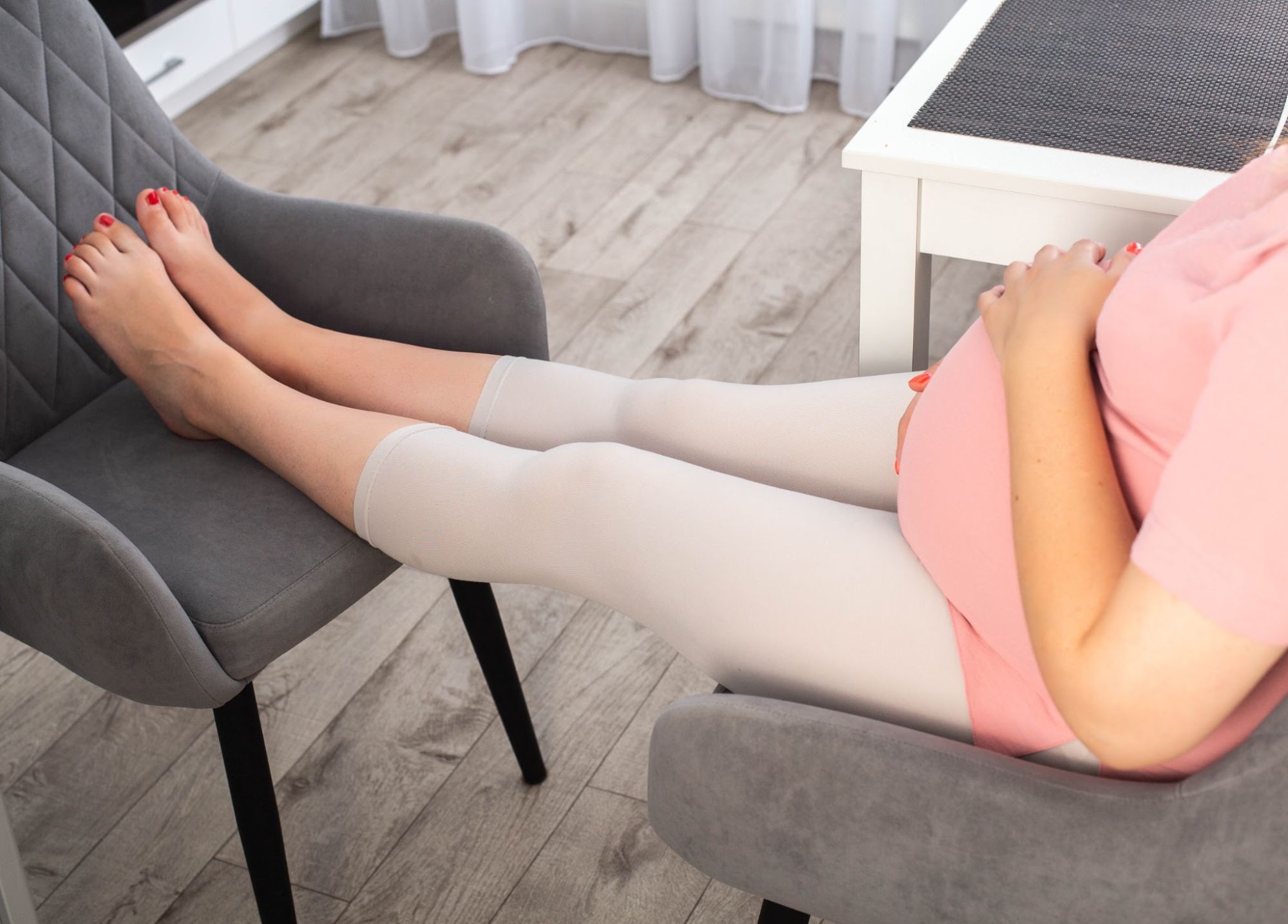
Compression stockings apply light pressure to your legs to help your veins push blood back to your heart. This improves circulation, helping manage increased blood volume and relaxed vein walls caused by pregnancy-related hormones. Key benefits include reducing leg swelling and preventing further vein distention.
If you’re pregnant and want to slow the progression of varicose veins, wear compression stockings throughout the day. Consult your medical provider for directions and the right pressure and size.
Adjusting Your Sleeping Position and Diet
Modifying your sleep position can reduce blood pooling and lower swelling. Sleeping on your left side relieves pressure on the inferior vena cava, promoting better blood flow from your legs back to your heart. Elevating your legs slightly above heart level further supports circulation and helps limit additional damage to varicose veins. In addition to adjusting your sleep position, you should adopt a whole-foods diet.
Adjusting your diet helps control excess weight and reduces pelvic pressure, both of which support healthy leg veins. A nutrient-dense, fiber-rich diet with fruits, vegetables, whole grains, and lean proteins helps maintain proper blood flow and may reduce strain on veins during pregnancy. For information on food to avoid, read our article about the Worst Foods for Your Heart.
When to See a Vein Specialist
Varicose veins that develop during pregnancy usually resolve within 3 to 6 months postpartum. If they do not resolve on their own during this window, you should see a vein specialist.
Symptoms That Require Medical Evaluation
Pregnancy-related varicose veins are generally harmless and often resolve on their own. However, certain warning signs do require medical evaluation.
These symptoms include:
- Active Bleeding: If a vein is bleeding, it can lead to high-volume blood loss due to pooling and elevated pressure within varicose veins.
- Leg Swelling: Painful, sudden swelling can be an alarming sign of a blood clot, called Deep Vein Thrombosis (DVT).
- Skin Changes: Developing ulcers, thickening, or skin discoloration near your ankles that may indicate advancing varicose veins.
If you’re experiencing these symptoms, you should seek a vein specialist.
Postpartum Treatment Options at VeinSolutions
At VeinSolutions, we offer postpartum treatment options for pregnancy-related varicose veins.
Microphlebectomy is an outpatient procedure that removes medium to large varicose veins. During this treatment, vascular surgeons in Flint and Lapeer, Michigan, use local anesthesia to make small incisions in the area around the vein. The doctor will use a hook to grab and remove the damaged vein. Microphlebectomy provides immediate results.
Sclerotherapy is also a highly effective, minimally invasive treatment that seals the damaged veins shut. During this procedure, a local anesthetic may be applied for comfort. A vascular specialist then injects a solution to seal the affected veins. After this procedure, you are encouraged to walk during recovery to improve blood circulation and to avoid strenuous workouts or sun exposure.
Venous ablation relieves pain and reduces the appearance of protruding veins by removing the diseased vein. This procedure involves radiofrequency to collapse and close the varicose vein. To learn more about this minimally invasive and effective treatment, click here.
If you are considering microphlebectomy, sclerotherapy, or venous ablation, communicate with your healthcare provider if you are currently breastfeeding. Our vascular specialists are here to help guide you through your varicose vein journey. Contact us today for help managing your varicose veins during pregnancy.